Sexing a Duck by the Quality of its Quack
You
can determine the sex of a duck by listening to
the sound of its quack.
At about 10 weeks of age, the voices of all domestic ducks
(except Muscovy ducks) take
on easily distinguishable male and female characteristics.
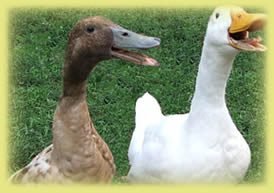
The voice of a female
(hen) is a loud "Quack-Quack!" or
"Uht-Uht!"
The voice of a male (drake) is soft and whispery.
They sometimes even have a slight whistle until
they reach full maturity.
To listen to the audio tracks of male and female duck quacks, click on
the play buttons on the audio consoles below.
Sexing a Duck by the Curl of its Tail
The voice of a duck is the most accurate indicator of
gender, but if a duck is out of earshot, or just plain refuses to talk,
you can sometimes determine their sex by the
appearance of their tail
feathers.
If you see any curled tail feathers, you are most likely looking at a drake.
There are rare occasions when a hen will sprout a deceptive
curly tail feather. This tends to occur when there are no
drakes in the flock. Sometimes one hen will temporarily take
on a mock-drake roll.
Also keep in mind that drakes molt their tail feathers once
a year. If you are looking at the tail feathers of a duck
during this time, you may be temporarily fooled into
believing you are seeing a hen--until a new tail feather
grows back in anyway.
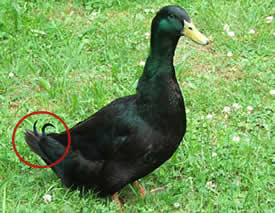 Young Jeffrey (Drake) Sports His Curled Tail Feathers
Sexing a Duck by Their
Freckles
When mature female ducks begin their egg-laying, the
hormones in their bodies cause color changes to their bill and these
color changes look a lot like freckles!
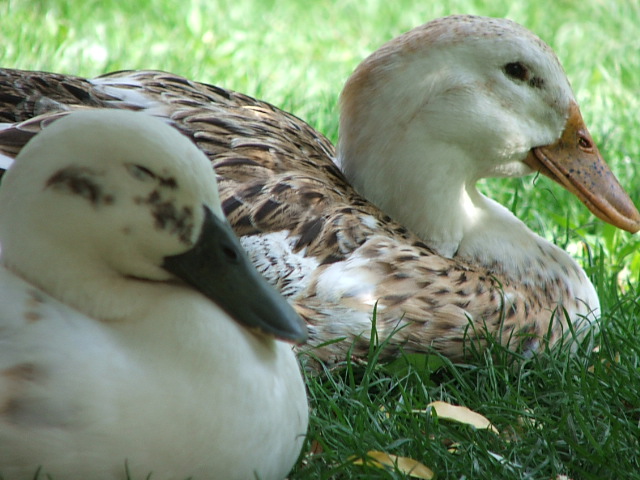
A duck with a freckled bill is a female. A duck without
freckles could be either male or female.
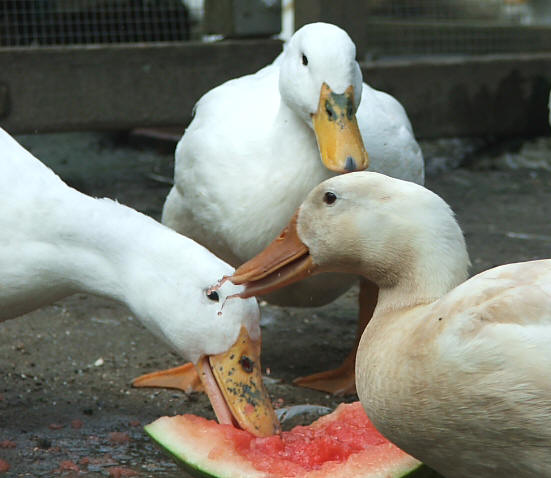
Sexing a Muscovy Duck
The call of a mature female Muscovy Duck sounds like a trill or coo--and
they even SQUEAK sometimes!
Mature males
make a "huch-uch-uch" deep and breathy sound (often while "wagging" their tail and fluffing up the
feathers on their crown).
Muscovy ducklings peep just like any other duckling.
As ducklings, male Muscovy ducks often have larger feet than
females.
Although young Muscovy drakes and hens are very similar in
size and appearance, as they age, males grow noticeably larger than
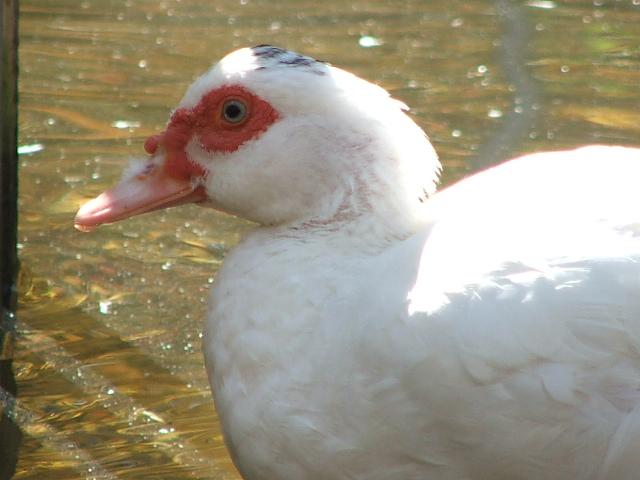
females and have more elaborate and bulbous facial masks (caruncles)
with a large "bean" over the center of their bill.
Juvenile male & female Muscovy ducks have a black dot on top of their head
that fades away as they mature.
Muscovy Drake:


Young Muscovy Hen:

Also See:
Is it a
Goose or a Gander?
|