|
Postage Stamps Needed

A
vital part of our existence is letting the right people know
where to find us should a waterfowl emergency arise.
While handling a few recent rescues, we discovered that people
who have stumbled upon domestic waterfowl in desperate
situations have had a difficult time finding help.
Unaware of our sanctuary, many people are contacting their local
animal control officers, SPCA, Humane Society, DEP, wildlife
rehabbers and various other animal groups only to be turned away
without further direction. We understand that many of these
groups do not have the facilities to assist in domestic
waterfowl situations, but we must get the word out to them that
we are here should people need us. This will enable us to react
quickly when a duck or goose's life is in danger.
For this reason, beginning with the state of CT, we are
immediately mailing out our contact information to as many of
these organizations as we can find (over 170 in CT alone) to
keep on hand for emergencies.
If anyone can spare $.39 stamps, please send as many as you can
to assist us in this urgent endeavor.
Get to Know
Your Predators:
The Skunk

A skunk weighs in at about fourteen
pounds and they will eat eggs or ducklings.
As with opossums, motion sensor lights
are helpful, but I am NOT going to recommend a good guard dog…
The Month in
Photos!
Recommended
Reading*
|
Ordering
information
|
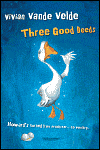
Three
Good Deeds
By
Vivian Vande Velde
When a local
witch sees the boy Howard stealing eggs from the geese that she
tends, she decides that he needs a lesson so she changes him,
fittingly, into a goose. Correctly discerning that Howard rarely
thinks of others, the witch refuses to return him to human form
until he has done three good deeds.
Howard's
learning to be a goose is almost a full-time job, and it comes with
unexpected, occasionally poignant setbacks, such as when his friends
don't recognize him. Of course, Howard fumes, frets, and schemes to
get around the curse, but he eventually stumbles into a good deed
and feels the pleasure of doing right, if only briefly.
Although Howard
doesn't change dramatically, by the close of his uncomfortable
lesson he has begun to think more about those around him -- both the
human and the feathered kind. With well-spaced print, plenty of
dialogue, a strong dose of humor, and more invention than many books
written at this level, this goose tale is a nicely accomplished,
entertaining read, with strong potential for reading aloud to
younger children.
|
* |
For
our full recommended reading list, click
here. If you order from
Amazon by way of our website, Majestic receives a
portion of the proceeds!
|
Reader Poll
#27
(Double Poll!)
Question 1:
Are you going to read Bob Tarte's new book Fowl Weather?
Question 2:
Have you read Bob Tarte's first book Enslaved by Ducks?
Results of Reader Poll #26
What behavioral problem(s) are you currently experiencing
with your waterfowl? (Listed
in order of most frequent response to least)
|
Attacking humans |
|
Attacking other animals |
|
Attacking other waterfowl |
|
Making too much noise |
|
Not going in shelter at night |
|
Not coming out of the water |
|
Overmating |
|
Seizures |
Contact Us
Majestic Waterfowl
Sanctuary
17 Barker Road
Lebanon, CT 06249
directorATmajesticwaterfowl.org
Our Newsletter
The Majestic Monthly is published 12 times per year.
Previous issues are available in our
Archives.
|
Goose
Entertainment Just when we
thought we’d heard it all, we received this email from a
concerned goose owner:
|
I
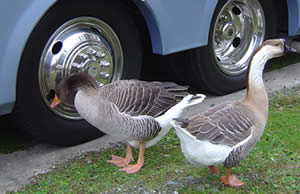
have a different question. We have a new 36' Motor
home that my two wonderful geese (one a Toulouse and
one an African Brown) seem to be obsessed with. They
stand at the shiny wheels and would peck for 24
hours if I did not put them away at night. It is
driving my husband crazy. Of course, the new emblems
that are less than 3' from the ground are off. Any
suggestions on some type of animal alarm? Valium
for my husband when he comes home and finds out that
they have pecked the tires off?
-- Thanks, Myrna |
Our first suggestion to remedy the
situation was to place tire covers over the source of intrigue
-- especially the shiny hubcaps that are reflecting images and
attracting so much attention. Our second suggestion was to
introduce enrichment activities to the geese to draw them away
from the motor home:
Mirrors
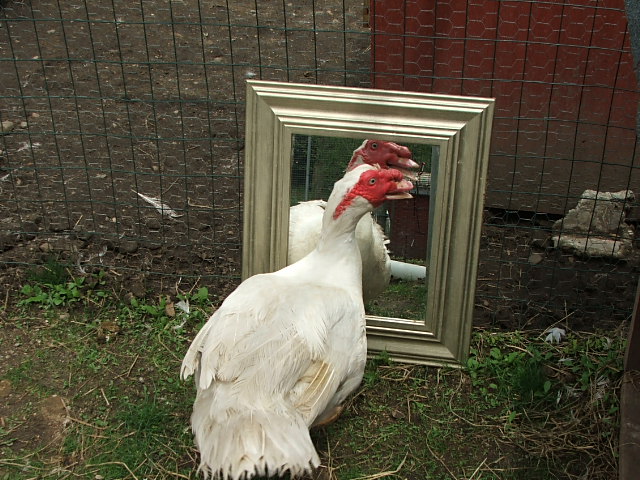 Mirrors are a great distraction and source of
entertainment for ducks and geese alike. They can be
used to cheer up a lonely single bird, especially
after the loss of a flock mate. Mirrors are a great distraction and source of
entertainment for ducks and geese alike. They can be
used to cheer up a lonely single bird, especially
after the loss of a flock mate.
Cups of Water
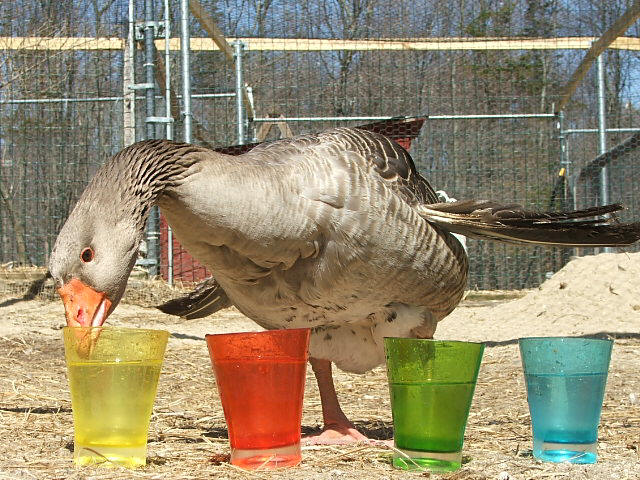 Ducks and geese see in color, so use colors to
intrigue them. You can partially fill a colored cup
with water to interest and entertain your
investigative birds. You can add a snack to the
water for even more fun. Ducks and geese see in color, so use colors to
intrigue them. You can partially fill a colored cup
with water to interest and entertain your
investigative birds. You can add a snack to the
water for even more fun.
Balls
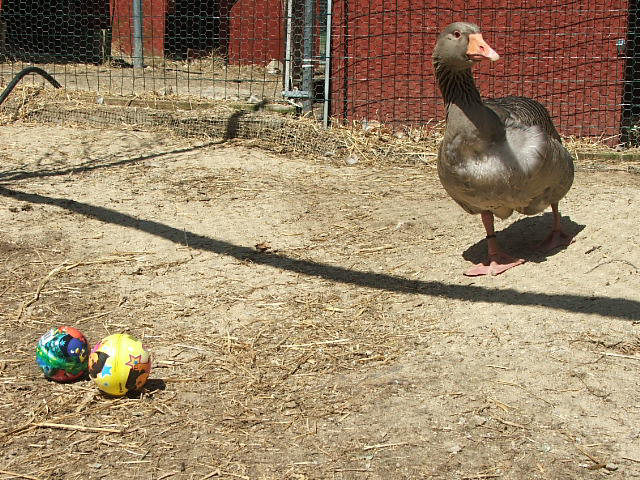 A
small ball (3” in diameter or larger) on the ground
or on their pond can entertain a bored goose. A
small ball (3” in diameter or larger) on the ground
or on their pond can entertain a bored goose.
Parrot
Toys
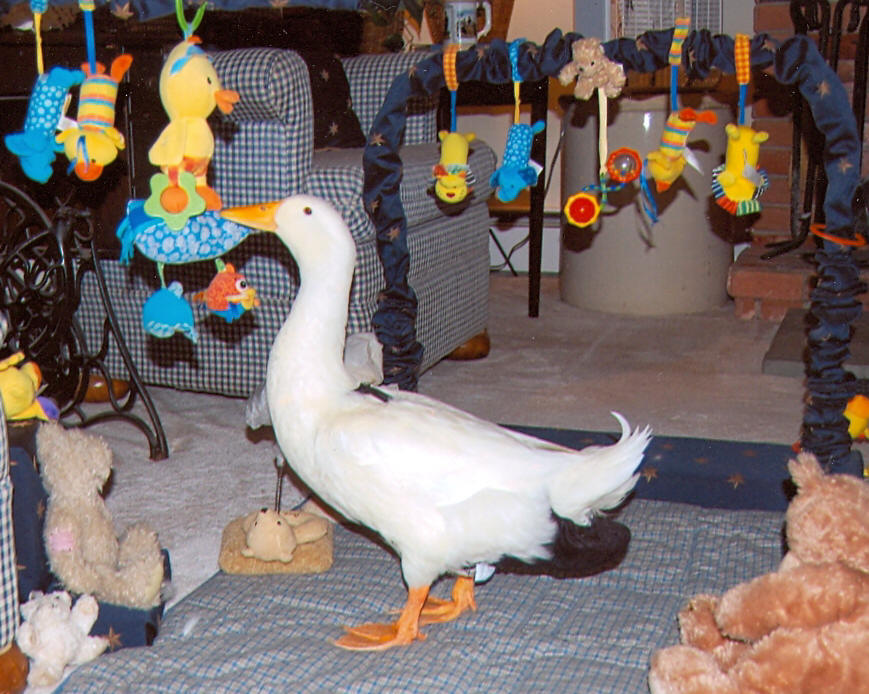 Some geese are entertained with parrot toys
or baby toys--especially if it has pieces they can tug on, or if
they include unbreakable mirrors. Avoid toys with
small pieces or metal parts that can be broken off
and ingested, or remove these dangerous parts before
giving the toy to your goose. Don’t be afraid to
modify toys to make them safe for your playful
goose. (Photo of Omalie Courtesy
of Chantal) Some geese are entertained with parrot toys
or baby toys--especially if it has pieces they can tug on, or if
they include unbreakable mirrors. Avoid toys with
small pieces or metal parts that can be broken off
and ingested, or remove these dangerous parts before
giving the toy to your goose. Don’t be afraid to
modify toys to make them safe for your playful
goose. (Photo of Omalie Courtesy
of Chantal)
Plush
Animals
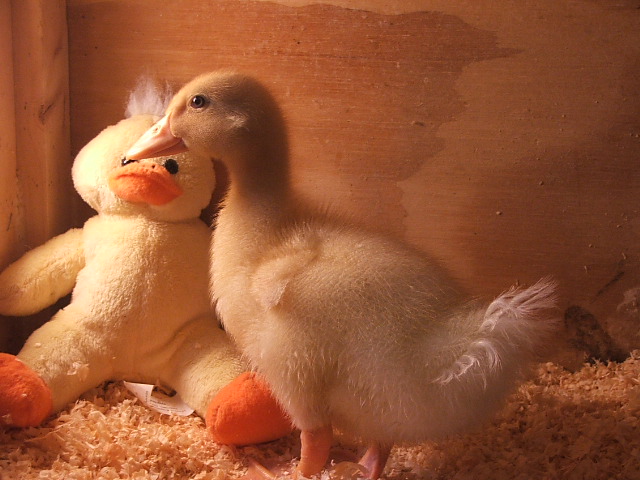 Some geese enjoy playing with plush animals,
especially those who are introduced to them and
taught to cuddle with them as goslings. Be certain
eyes, choking hazards, etc. can not be removed and
stuffing is both non-toxic and non-hazardous. Some geese enjoy playing with plush animals,
especially those who are introduced to them and
taught to cuddle with them as goslings. Be certain
eyes, choking hazards, etc. can not be removed and
stuffing is both non-toxic and non-hazardous.
Mirrors
and Gadgets
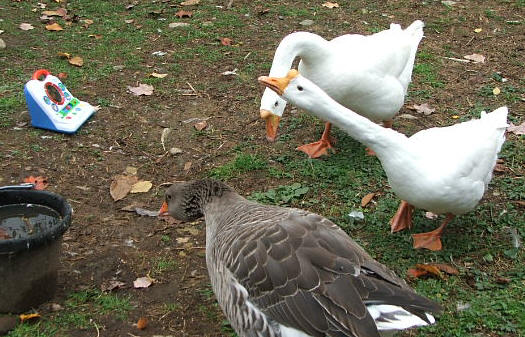 Find toys with mirrors and things to peck at -- some
even make noises like Leap Frog’s See & Learn Piano! Find toys with mirrors and things to peck at -- some
even make noises like Leap Frog’s See & Learn Piano!
Lettuce
Maze
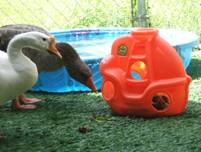 Insert leaf lettuce into a toy with holes in it, so
the geese have to work to get their healthy snacks.
Be careful not to make holes too small, so bills
don’t get stuck. You can also find treat balls that
roll and drop goodies on the ground behind them. Insert leaf lettuce into a toy with holes in it, so
the geese have to work to get their healthy snacks.
Be careful not to make holes too small, so bills
don’t get stuck. You can also find treat balls that
roll and drop goodies on the ground behind them.
Tire
Toys
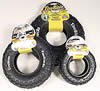 For those geese who just can’t resist pecking at
tires…well, there is an answer -- tire biters! Tough
chew toys intended for dogs. These toys should keep
any fixated geese busy and away from your beloved
motor home. Another option is tire feeders, although
holes may need to be enlarged for safe removal of
treats. For those geese who just can’t resist pecking at
tires…well, there is an answer -- tire biters! Tough
chew toys intended for dogs. These toys should keep
any fixated geese busy and away from your beloved
motor home. Another option is tire feeders, although
holes may need to be enlarged for safe removal of
treats.
Remote
Control Toys
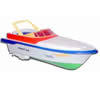 Both land and water remote control toys can be fun
as long as they are introduced slowly and with
extreme caution. Don’t scare your goose! First let
them investigate the toy when it is not operating.
Slowly introduce subtle motion when they are at a
distance to peak their curiosity. Both land and water remote control toys can be fun
as long as they are introduced slowly and with
extreme caution. Don’t scare your goose! First let
them investigate the toy when it is not operating.
Slowly introduce subtle motion when they are at a
distance to peak their curiosity.
Rubber Duckies
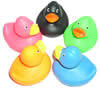 Colorful objects (no small parts or removable
pieces) can also inspire interest and promote
investigation. You can float rubber ducks on their
pond, in their water bucket or even place them on
land. Colorful objects (no small parts or removable
pieces) can also inspire interest and promote
investigation. You can float rubber ducks on their
pond, in their water bucket or even place them on
land.
Fun, Fun, Fun!
Rotate toys in and out of play to keep
things from getting dull. Remember to take care before leaving
your goose alone with any toy. Avoid toys with sharp edges or
breakable pieces. Consider that some toys are best used only
when you are around, depending on the personality of your goose
and the quality and design of the toy.
Thanks for your email, Myrna, and good
luck!
* Some of the
products featured in this article are available through
Sanctuary Supplies (www.sanctuarysupplies.com).
Click on “Zoo Enrichment” in the “Products” menu bar. When
placing an order, consider sending some enrichment toys to the
ducks and geese at Majestic!
Bob Tarte's New Book Available for
Pre-Order!
Pre-Order
a copy of Bob Tarte's new book Fowl Weather at
Amazon.com by clicking on the "Pre-order
this item today" button below and Majestic will
receive a portion of the proceeds!
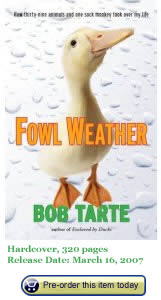 On
the web-footed heels of Enslaved by Ducks (2003), Tarte serves
up another helping of his always interesting life surrounded by
animals. On
the web-footed heels of Enslaved by Ducks (2003), Tarte serves
up another helping of his always interesting life surrounded by
animals.
From the first chapter, when Stanley
Sue, a parrot, is discovered chewing up the wooden bread box,
the reader is plunged into the often chaotic world of the Tartes,
in which Bob is obsessing about the hose demon or the
whereabouts of his mother's lost purse and wife Linda is popping
another gel pack into the microwave to soothe her bad back.
Along the way we meet Lulu, a spoiled
Pekin duck; Moobie, a large white cat who insists on Tarte
holding her water bowl; and Bertie, a rabbit who lost his tail
to Stanley Sue.
Mixed in with animal adventures are the
realities of daily life, of alleged master gardeners who don't
understand soil, and of Bob's mother, whose increasing signs of
Alzheimer's disease weave a softly melancholy thread through the
narrative. What Tarte discovers is that his animals give him his
center and focus and that for all the headaches they can cause,
they also provide a form of sanity.
Also
Available: Bob Tarte's First Book, Enslaved By Ducks
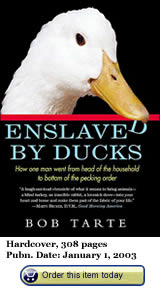 Knowing
little about animals, Tarte and his wife naively acquire Binky,
an impish bunny, at an Easter bunny fair, little suspecting that
it will soon dominate their lives and lead to a brigade of other
winged and furred beasts. Knowing
little about animals, Tarte and his wife naively acquire Binky,
an impish bunny, at an Easter bunny fair, little suspecting that
it will soon dominate their lives and lead to a brigade of other
winged and furred beasts.
After Binky, they get a canary, then
Ollie, an orange-chin pocket parrot, whom they return because he
flings his water-logged food all over their floor and accosts
them with calls and bites. Then they buy a more docile
gray-cheek parakeet, which makes the Tartes realize they miss
their raucous friend Ollie, whom they retrieve. Gluttons for
punishment, the Tartes acquire a gender-confused African gray
parrot named Stanley Sue, followed by ducks, geese, turkeys,
parrots, starlings, more rabbits and cats. Every day brings an
adventure or a tragedy to their Michigan country house.
With dead-on character portraits, Tarte
keeps readers laughing about unreliable pet store proprietors, a
duck named Hector who doesn't like water, an amorous dove named
Howard, a foster-mother goose, patient veterinarians and
increasingly bewildered friends. Tarte has an ordinary-Joe voice
that makes each chapter a true pleasure, while revealing a
sophisticated vision of animals and their relationship to
humans.
(Photos and descriptions
used by permission from Author, Bob Tarte)
|

 Goose Entertainment