|
All The Month
in Photos
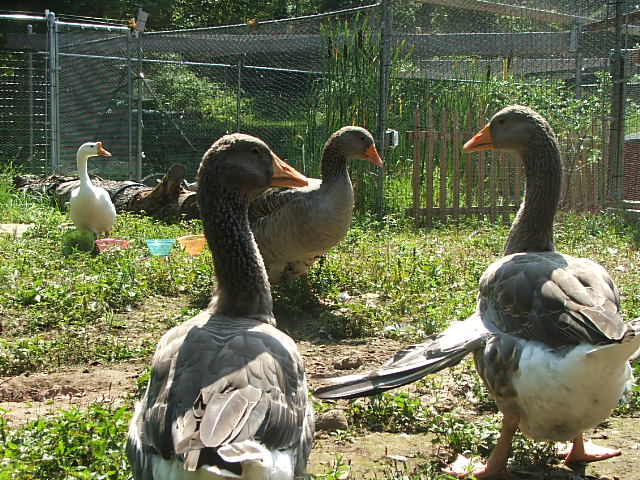
3
Toulouse
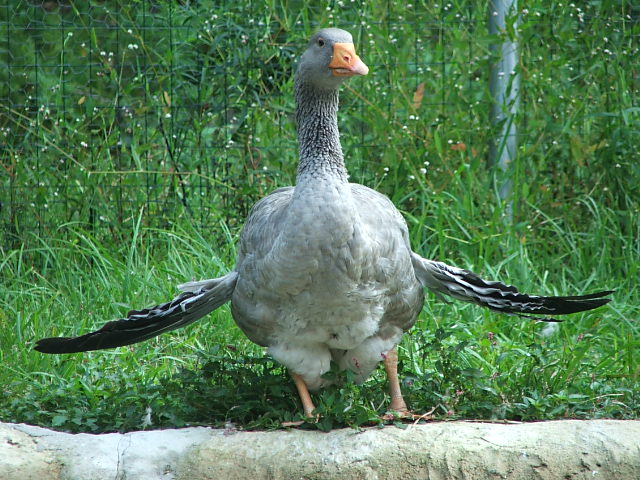
Angelo "The Airplane"

Border Dispute!
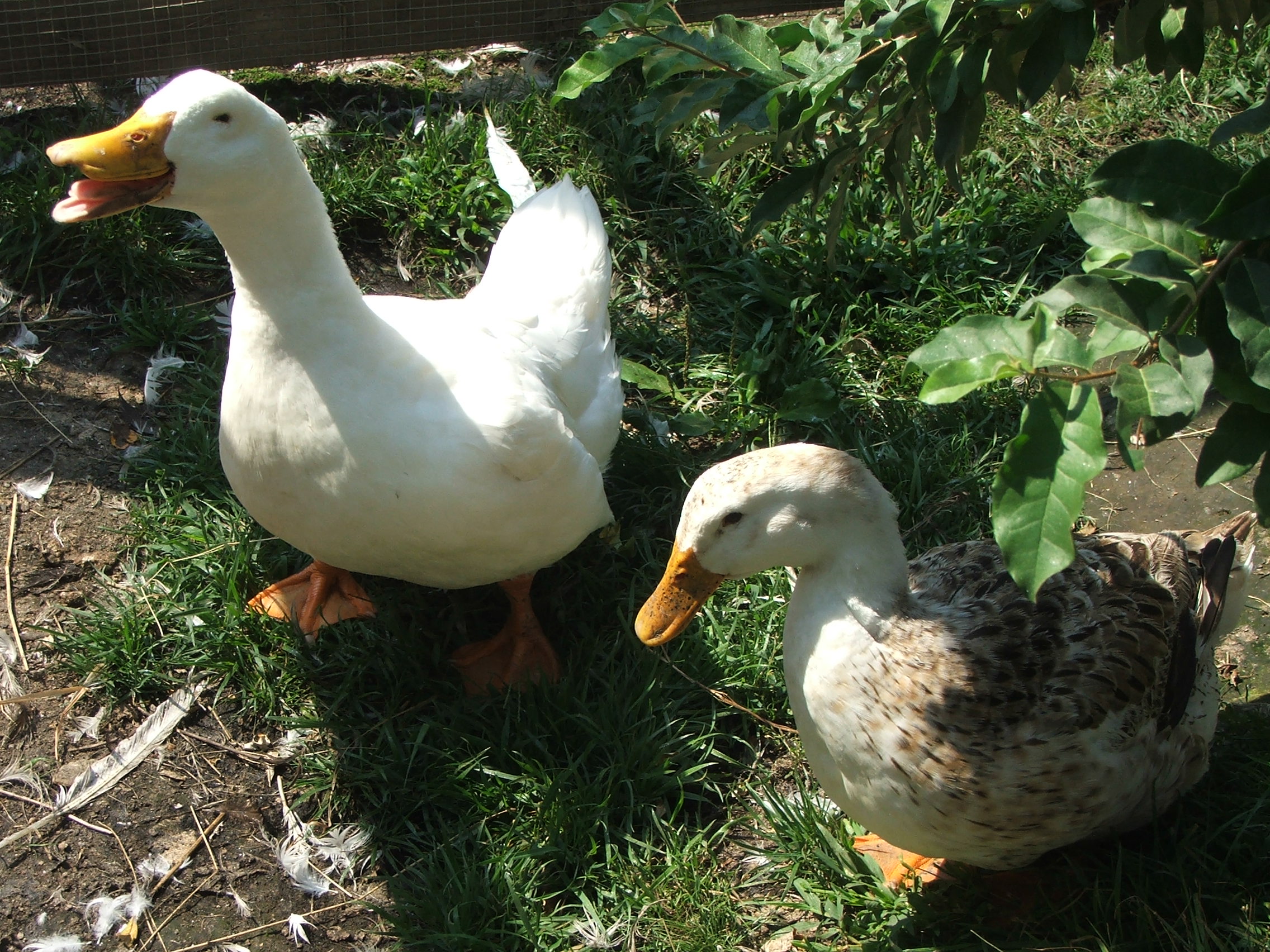
Elijah has a
QUACKING good time!
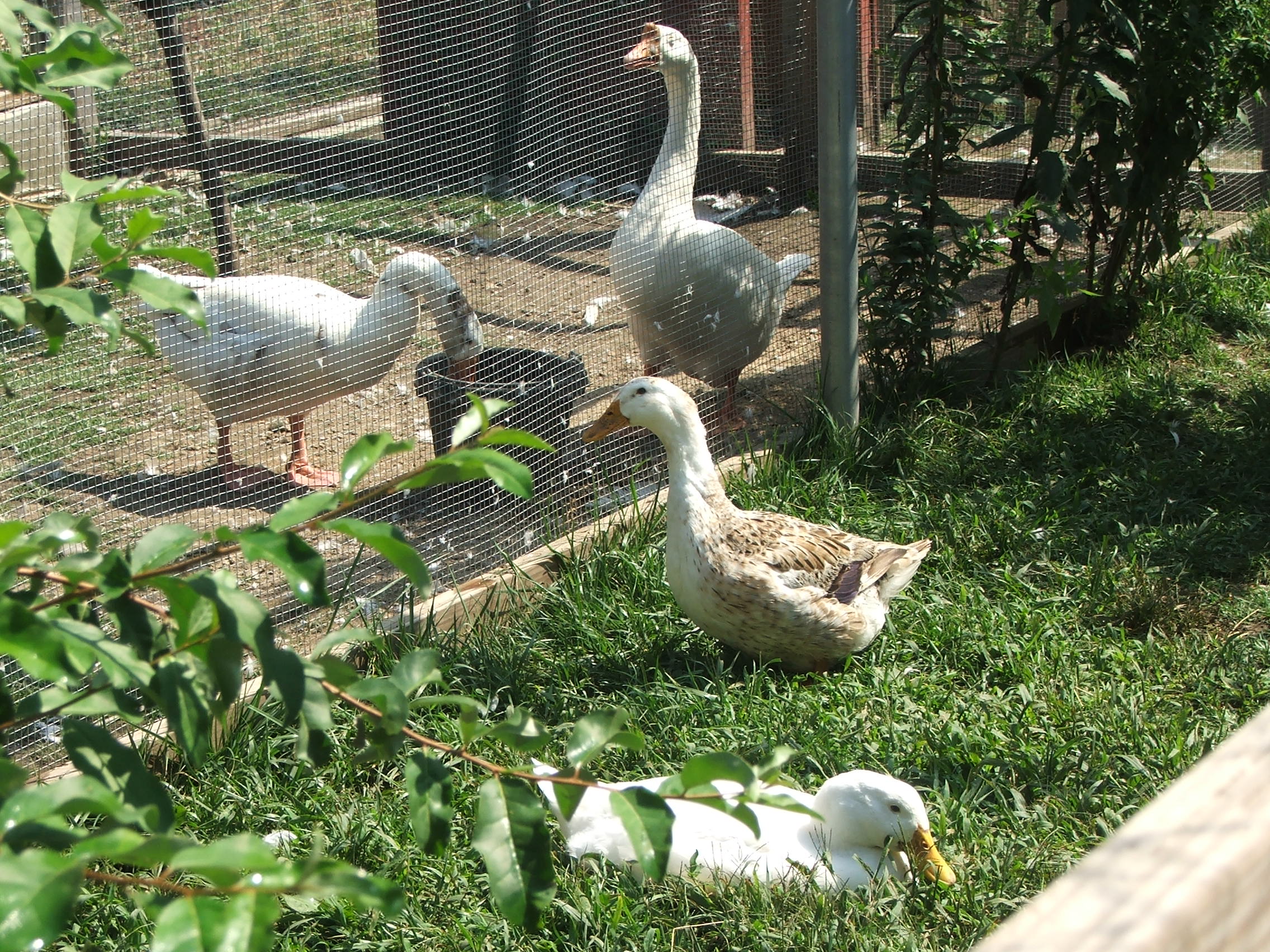
Jezebel &
Elijah meet the neighbors
Get to Know
Your Predators:
Chicken
Hawk/Cooper's Hawk
Although not nearly as aggressive as
many of the other raptors, or as large, The Chicken Hawk only weighs
in between 8 and 21 ounces. However, since we are commonly asked
about them (because of their name, I suspect), I am including them
on the list. They are mostly of concern if you have ducklings.
Hawks,
falcons and eagles are all diurnal raptors. If your ducks do not
have top cover, they will be at the mercy of these predators. Most
attacks occur on free range ducks, especially when they are in open
areas that lack sufficient cover.
All
hawks, falcons and eagles are federally protected under the
Migratory Bird Treaty Act, which prohibits their possession or
destruction. No permits are required to scare them off except in the
case of an endangered or threatened species, as in the case of the
bald and golden eagles. Check your own state’s laws and regulations
prior to taking any actions against these birds.
Recommended
Reading*
|
Ordering
information
|
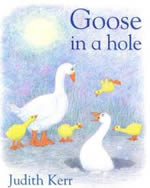
Goose in a Hole
By Judith Kerr
When the water
in the village pond disappears into a hole, Katerina the goose leads
her family down it to find a new pool. At the same time, the mayor
is having plumbing problems, while the townspeople are concerned
about the water's disappearance. Only little Millie Buswell worries
about her favorite goose. Meanwhile, the geese follow the water
underground, surfacing through a storm sewer into a fountain and
then to the hippo pool at the zoo.
The parallel
story lines of the geese and the humans flow smoothly into a
satisfying ending. The soft, colored-pencil drawings track Katerina
and her goslings on their underground adventure, while the
townspeople work to refill the pond. Kerr uses a minimum of lines to
express a wide range of emotions–puzzlement, concern, curiosity,
confidence, sadness, and joy. Simple details add dimension to the
story. Foxes, rabbits, and moles live along the geese's route.
Worms, ladybugs, and other soil dwellers crawl in the dirt. A
playful cat chases a frog across several pages.
|
* |
For
our full recommended reading list, click
here. If you order from
Amazon by way of our website, Majestic receives a
portion of the proceeds!
|
Reader Poll
#30
Question:
Which are funnier to watch, ducks or geese?
Results of Reader Poll #29 Question 1:
If you could only have one duck on a desert island as
a companion, which kind would you choose?
Question
2:
If you could only have one goose on a desert island
as a companion, which kind would you choose?
Contact Us
Majestic Waterfowl
Sanctuary
17 Barker Road
Lebanon, CT 06249
directorATmajesticwaterfowl.org
Our Newsletter
The Majestic Monthly is published 12 times per year.
Previous issues are available in our
Archives.
|
Broken
Toenail/Torn Webbing
Protecting webbed feet is a vital necessity
when you have a flock. Ducks especially can be quite clumsy and
tend to stumble easily over small obstacles in their paths. In
order to prevent injuries keep their yard free of sticks, rocks
and nuts. Fill holes as they appear.
Avoid requiring your waterfowl to step up
and over objects (especially through doorways); instead build up
the ground to make broader, more natural ramps whenever
possible. This solution is often safer than constructing ramps
out of wooden boards. Ducks often fall sideways off of board
ramps or hop off the ramp when they get near the bottom; either
of these actions can lead to injuries.
Kiddie pools are a great swimming option
for ducks and geese, but it is always best to dig out a hole and
sink the pool into the ground rather than just placing it on top
of the ground. Sinking the pool into the ground is much safer
than asking your waterfowl to jump up over the lip when hopping
in or out. This simple step can prevent leg, foot and toe
injuries.
If your duck or goose breaks a toenail,
which results in bleeding, the bleeding will most likely be
minimal and stop all on its own without any intervention from
you. If it is bleeding excessively, you can try to control it by
applying pressure to the area using a clean gauze pad. If you
cannot control the bleeding, call your vet for emergency
assistance.
Once bleeding is controlled, you will need
to address any damage to the bird’s toe or webbing. If the
toenail was not completely severed, cut the remaining portion
off with clippers.
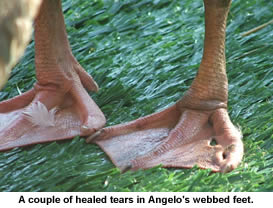
Torn webbing does not normally require vet
intervention as long as it is minimal (a straight tear, less
than a ¼ inch in length), but it can’t hurt to call your vet and
double check. Some situations do require stitching.
To prevent infection, put the bird in
freshly drawn, clean water and allow them to swim in it for a
few minutes to cleanse the wound. Remove the duck or goose and
disinfect the injury using a hydrogen peroxide solution
(following mixture directions on the h.p. bottle). Put the
solution into a spray bottle and completely spritz the area.
Spray bottles work very well because you can save the unused and
uncontaminated solution for a few days. Spray the
toenail/webbing area 3-4 times daily for about five days.
Remember: it is best to have a
fully stocked waterfowl medicine kit on hand to help you react
in emergency situations.
Clean the waterfowl’s yard and house and
put down fresh bedding. Keep quarters as clean as possible to
prevent infection while the toenail heals. If the bird is
limping, you will want to keep them in smaller, more confined
quarters—preferably sectioning them off in an area measuring
around 4’ x 4’. This will encourage them to rest and stay off it
for a little while. It is best to keep other flock members in
sight, but outside of this penned area until the injured party
is feeling better again.
Watch the injured area closely. If an
infection occurs at any time, continue to use the h. p. solution
and call your vet for immediate assistance. When in doubt, call
your vet.
Zinc Poisoning
Some of our close friends experienced zinc
poisoning amongst their flock. We wanted to share some
preventative and treatment tips with everyone.
Avoid immersing galvanized wire into water
Zinc is used in
the galvanization of wire. If you have galvanized wire in
your pens, you want it to be vinyl coated whenever possible.
If you have non-coated galvanized wire, you want to avoid
any part of the wire being immersed in water or the zinc can
leach into the water. The zinc can then be digested by your
waterfowl when they drink the water. Some sources also
indicate that it can also leach into the soil when it is
buried underground.
Avoid metal
feed & water dishes
Zinc can also be
found in the coating of metal food and water pet dishes.
Avoid metal food dishes at all costs. Always use plastic or
rubber dishes to feed your pets.
Test your
water
Have your pond and
any water sources tested heavy metal toxicity; test lead and
zinc levels. Zinc levels need to be specifically requested
since they are not normally tested by many companies
offering water testing services. If zinc levels are high,
you will need to consult with them about remedying the
problem. In the meantime, you will need to drain out or
fence off access to any ponds and you will need to provide
drinking water from another source. You may wish to do this
while waiting for the test results (which can take up to two
weeks) to prevent the further consumption of toxins.
Test your
soil
Have the soil in
your pens tested. Remnants of paint or chemicals poured into
the soil can cause zinc toxicity. Fertilizers are also the
source of zinc contamination. You may be able to bring a
soil sample to a local university for testing. If zinc
levels are high, you will most likely need to move the site
of your duck enclosure. It is wise to test your soil before
building your waterfowl enclosure to avoid any issues down
the road.
Grain
mixture mistakes
A bag of feed
mixed improperly can also lead to high zinc levels. If an
x-ray confirms no metal was swallowed (hardware disease) and
you cannot determine the cause of zinc poisoning among your
flock, you will want to examine their grain.
Although uncommon
with name brands, grain companies do make mixture mistakes.
The zinc levels could be too high in a batch of food. Your
best bet is to stop feeding them from the bag on hand and
purchase a new bag. Be sure to compare lot numbers on your
current feed bag and purchase a new bag from a different
batch. Contact the manufacturer if you need help finding
this information on their packaging. You may wish to
actually test a sample of the feed for confirmation. If it
comes up positive, follow up with the manufacturer. Be
prepared to fax / email them the label from the bag,
information stamped on the bag and the lab’s test results.
Symptoms
Symptoms may
include:
lethargy, weakness, loss of appetite, weight loss, diarrhea,
dehydration, excessive drinking, rubber legs (instability), drooping wings,
anemia and seizures. Unfortunately, once
they appear the condition is more difficult and takes longer
to treat.
This makes prevention your best defense. Test your water and
soil before building waterfowl enclosures to avoid future
mishaps.
Treatment
In addition to
isolating and eliminating the cause of the zinc poisoning,
you will need to treat your affected flock members.
Zinc poisoning is
different from lead poisoning in that zinc is able to work
its way out of your bird’s system provided the source of
contamination is successfully and completely removed.
Follow-up blood
tests will need to be performed once treatment begins to
verify that zinc levels are being reduced effectively. Be
cautious, if you see a lot of up and down fluctuation that
doesn't add up. Testing labs sometimes have trouble
providing accurate results.
Prescription
If your bird’s
zinc levels are high enough to put them at risk, medication
will be prescribed to bring their levels back under control.
Brand name:
Cuprimine or non-brand name: Penicillamine will most likely
be prescribed orally to draw the metals out of the body.
Side Effects:
Penicillamine is a chelater / chelating agent. This
means that in addition to drawing metals from the body it
will also draw calcium out of the body. Calcium chips /
oyster shells should be removed at dosing times and then
re-introduced two hours afterward.
Waterfowl of the
Month
Some of our rescued
friends have been with us for over a year now. We love our
foster flock, but it is important that they go on to new homes
with predator proof pens (no free range, please) to be loved by
new families.
Finding new homes for
our beloved friends is vital for their well-being and a
necessary part of making space for newcomers that need the
safety of our sanctuary.
Beginning this issue
we will feature a duck or goose of the month in an effort to
find them new homes. Perhaps a duck or goose in our sanctuary
will strike your fancy. We hope so!
June’s Ducks of the
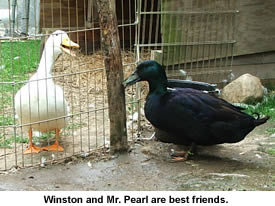
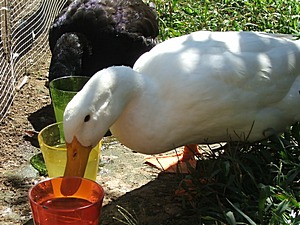
Month are Winston & Mr. Pearl!
Winston & Mr. Pearl
have been with us for a very long time, and we are not sure why.
These boys are imprinted on humans and love interaction --
especially Winston. They have the funniest walk -- they have
happy feet that pitter-patter really fast as they move along.
Winston & Mr. Pearl
are best friends and enjoy being together. In spring & summer
they get a little excited and need a small dividing pet fence
set between them, but they still love each other dearly and are
wonderful boys.
This pair endured
living in a pet carrier on a neglectful pet sitter’s apartment
porch before coming to us a couple years ago. Their owners were
unable to reclaim them due to life changes.
These boys need a new
home. They are so imprinted on humans as to be afraid of other
drakes, so they can either go to a home with no other ducks or
to a home with only hens. They are so trusting of humans that
they fear to come out of their pen unless a person is escorting
them and watching over them. They are only comfortable in a pen
with top protection from flying predators.
If you have room in
your family, please consider adopting Winston & Mr. Pearl!
If you can’t adopt
these beautiful drakes, please consider sponsoring these
wonderful boys by visiting our
sponsor page.
|

 Broken Toenail/Torn Webbing